You’re Gonna Do What?
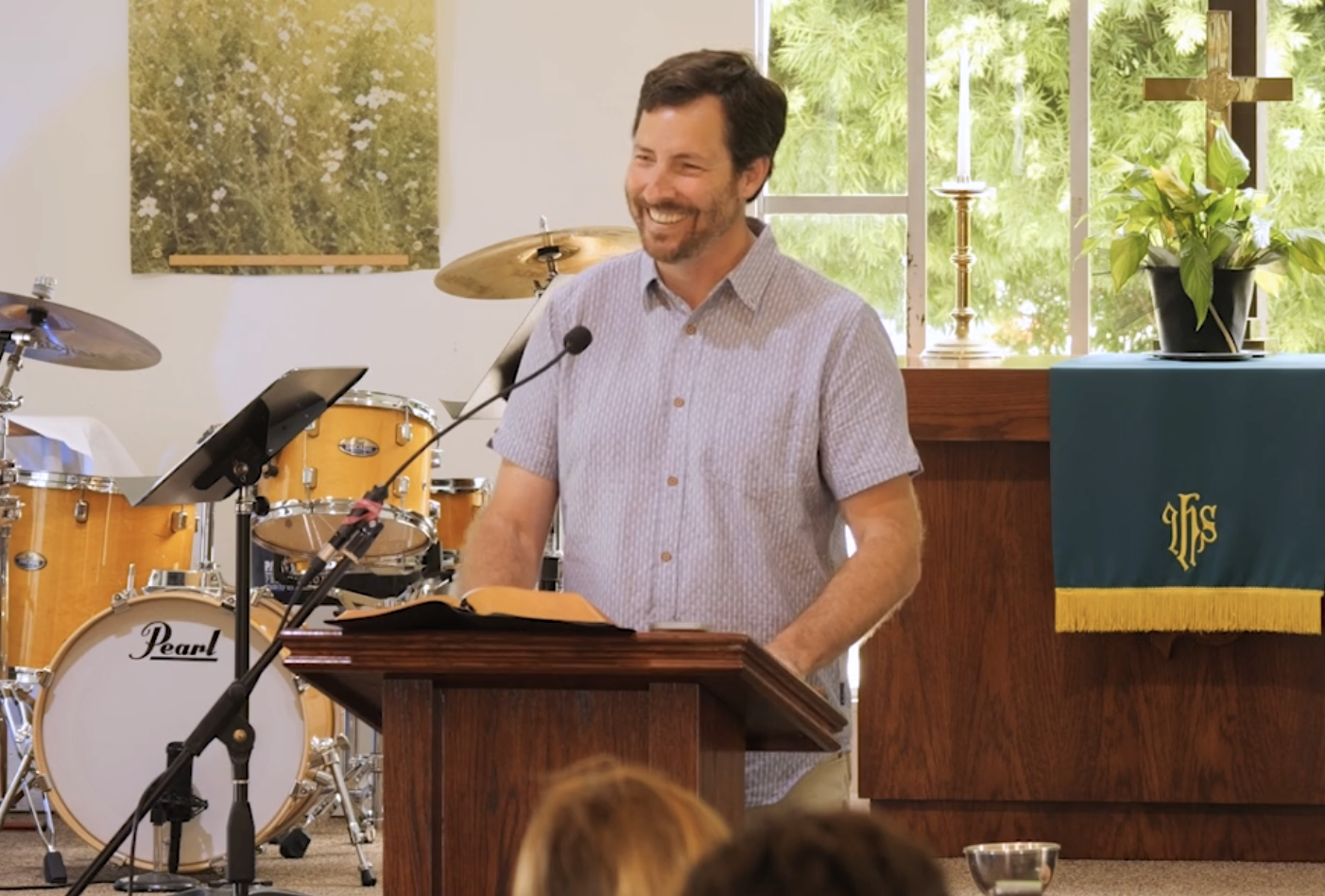
Click the image to watch the message.
Message given on John 13:1-17 at Seaside Church in Torrance, CA on September 27th, 2026:
John 13:1–17
Good morning. I love passing the peace, and I love gratitude. I love that song: "I have nothing to offer but a heart that would sing hallelujah." And I think that goes so well with our text today. If you have your Bibles, I invite you to open up to the Gospel of John, chapter 13. We're going to read through verses 1 through 17.
And then I have, hopefully, a funny analogy to start with. It was pretty funny for the first service, but it always depends on the crowd, so we'll see. But let me read the text, and then I'll pray. This is the Gospel of John, chapter 13, starting from verse 1:
"Now before the Feast of the Passover, when Jesus knew that his hour had come to depart out of this world to the Father, having loved his own who were in the world, he loved them to the end. During supper, when the devil had already put it into the heart of Judas Iscariot, Simon's son, to betray him, Jesus, knowing that the Father had given all things into his hands, and that he had come from God and was going back to God, rose from supper. He laid aside his outer garments, and taking a towel, tied it around his waist. Then he poured water into a basin and began to wash the disciples' feet and to wipe them with the towel that was wrapped around him. He came to Simon Peter, who said to him, 'Lord, do you wash my feet?' Jesus answered him, 'What I am doing you do not understand now, but afterward you will understand.' Peter said to him, 'You shall never wash my feet.' Jesus answered him, 'If I do not wash you, you have no share with me.' Simon Peter said to him, 'Lord, not my feet only but also my hands and my head!' Jesus said to him, 'The one who has bathed does not need to wash, except for his feet, but is completely clean. And you are clean, but not every one of you.' For he knew who was to betray him; that was why he said, 'Not all of you are clean.'
"When he had washed their feet and put on his outer garments and resumed his place, he said to them, 'Do you understand what I have done to you? You call me Teacher and Lord, and you are right, for so I am. If I then, your Lord and Teacher, have washed your feet, you also ought to wash one another's feet. For I have given you an example, that you also should do just as I have done to you. Truly, truly, I say to you, a servant is not greater than his master, nor is a messenger greater than the one who sent him. If you know these things, blessed are you if you do them.'"
Father, thank you for your Word today, and thank you for this gospel account of your Son's willing heart and devotion to you, to serve his beloved. I ask that you just remind us of his example, but also of his gift of grace to us today, as we remember not only his willingness to serve us by washing us clean, but that it's his blood that washed us clean when he went to the cross for our sins. It's in Jesus' name I pray. Amen.
Okay, so, does anybody remember Top Gun? Yeah? Okay, good. It seems pretty universal. Do you remember in Top Gun when Maverick's flying and he says, "I'm going to hit the brakes. He's going to fly right by"? When that happens at the end of the movie, he's got a new guy in the back, right? Because we don't have Goose with us anymore. And remember the reaction the new guy gave. They're down to one missile, and he's got, like, four MiGs—whatever, MiG-29s, MiG-28s—on his tail. He's got this guy right behind him. He tells the new guy, "I'm going to hit the brakes. He's going to fly right by." And that guy was played by Tim Robbins. Of course, he's wearing a helmet, and he says, "You're going to do what?" And it's one of my favorite lines from that movie, because by then we, as the viewer, knew this trick should work.
And I think when we read the Bible, we have the account that Jesus serves, and I think Peter in this account was the guy in the back. He was a pilot. He was an aviator. He was the best of the best. He was the elite. He had the need for speed. And yet our hero did something so unexpected, so countercultural—such a great solution to the problem. Now, it wasn't maneuvering a plane and getting on the other guy's six and firing the missile and then rolling the credits while everybody is all happy on the aircraft carrier. The next day, Jesus would go to the cross. But when he washed the feet of the disciples, and he reminded Peter of his devotion to him because he was devoted to the Father, Peter's reaction of "You're going to do what?" turned into "Well, wash all of me, please." And Jesus reminded him, "I've made you clean."
So I'm going to take us through this account verse by verse. But that's pretty much the reaction I had when I got to it. I was thinking to myself, just like Peter, just like the guy in the back of the plane who didn't have control: "You're going to do what?" Let's see how this plays out.
We're in Holy Week. This is the night before Jesus will go to the cross. We're at the Last Supper. We're in the upper room, and this is called the Upper Room Discourse; it takes place over the next several chapters in the Gospel of John. And what Jesus is doing here kind of accords with the Synoptic Gospels, in the sense that we have the Last Supper here, and we have a bit of a disagreement that happens between the apostles as to who's going to get the influence and the right office and the right authority after Jesus hands off ministry. And it just reminds us that we can get pretty confused sometimes about the motives that Christ actually had. And so the wonderful thing about this story is that it gets right down to Jesus' motive, which was to serve his Father by serving us.
You know, Jesus died for all sin the next day, and for those who believe in him. We know from John 3:16 that those who believe in Jesus shall not perish but have eternal life. And I think this account tells us something, if you know how we've kind of understood our faith since the Reformation. There are these things called the solas. Do you guys know what the solas are? There are five of them. Okay, so sola is Latin for "only," or "alone." And just like the triune God—three in one can kind of make our brain feel fried sometimes; there are three persons in one God, Father, Son, and Holy Spirit—the solas are a way of looking at how the text reveals to us the whole story of God's plan and purpose. It starts with grace alone and goes to faith alone, Scripture alone, Christ alone, and glory alone. In the Latin it was sola gratia, sola fide, sola Scriptura, solus Christus, soli Deo gloria. Now, five "alones" doesn't make much sense, but it's all built on Christ, who is the Word. And he went to the cross for the Father's glory. And it was all because God the Father, by his grace, sent his Son. And so that's what we see kind of play out in this story today. We see the whole narrative arc of the gospel, and the purpose of it, done through the action of Jesus serving the disciples by washing their feet.
So verse 1—let's start with that. "Now before the Feast of the Passover, when Jesus knew that his hour had come to depart out of this world to the Father, having loved his own who were in the world, he loved them to the end." The Passover is going to be celebrated the next day. All the lambs will be taken to slaughter, and Jesus himself, the Lamb of God, will also be slaughtered. That was the hour that had come. His departure would be into the tomb for three days, but his departure out of this world to the Father would happen when he would ascend. "Having loved his own who were in the world"—Jesus is going to the cross because he's going to pay the cost of our sin, and "he loved them to the end." We think the end might be at the cross. That's what a lot of people would think, the next day or so in this timeline. But really, the end is any moment we have now to regard Jesus Christ as our Lord and Savior.
Verse 2: "During supper"—as this scene kind of reveals itself—"when the devil had already put it into the heart of Judas Iscariot, Simon's son, to betray him." Okay, so let's stop there and remind ourselves that Judas has been plotting to betray Jesus, his teacher, for some time. John 6:64 tells us, implicitly, "But there are some of you who do not believe." (For Jesus knew from the beginning who those were who did not believe, and who it was who would betray him.) So Jesus is not going to be caught by surprise when he shares the supper with Judas and sends him on his way. He will not be surprised when Judas brings the soldiers back later this evening to arrest him. Just as he won't be surprised by the trial, he won't be surprised by the shame thrown at him. He won't be surprised by the punishment, nor is he surprised by the cross. He's not surprised by Judas. In fact, in John 6, verses 70 and 71, John writes, "Did I not choose you, the twelve? And yet one of you is a devil." He spoke of Judas the son of Simon Iscariot, for he, one of the twelve, was going to betray him.
So Judas did not have something up on Jesus. He was chosen to be among the Twelve. He was empowered into ministry, to go serve one another. But all along, Jesus knew that Judas' heart would not get pricked, unlike those of the eleven, and Jesus was at peace with this. Why? Because it was the Father's will.
I think this brings up a good point: we should remind ourselves that unbelief is different from doubt. If you've ever had doubt about the Lord working in your life, or your fit for the Lord—obviously we sang about it in the first two worship songs—that doubt is a way to feel convicted by the Holy Spirit. But unbelief is our prideful separation from God in our sin. So I hope that encourages you, to be seeing Judas here as someone living in unbelief. But as we'll see, Peter is the one perhaps just still struggling with doubt.
So everyone's at supper there, reclined at table. "Reclined at table" means that they didn't have bench seating. They didn't have what they call those things—banquettes, you know, with the little diner seating. Some people designed their homes so they didn't have chairs. And so when the disciples and the apostles were gathered around the table with Jesus, they're kind of like this, and there might be some pillows at the edge, and they'd be eating the food. That way they could kind of socialize with one another, but their feet would kind of be splayed out there. And so that was the posture everyone had taken at this moment.
Verse 3: "Jesus, knowing that the Father had given all things into his hands, and that he had come from God and was going back to God, rose from supper." So Jesus is reclining at table. You know, it's like his last meal before going to execution. And what peace to be at, with his Twelve, taking in this meal, taking in their fellowship. Obviously, like I said, they'd be having some disagreements and grumbles and arguments or whatnot, but this signifies Jesus' willingness to be present and vulnerable and attentive.
This is the Passover meal. This is celebrated every year. It's a substantial feast to celebrate the deliverance of the Israelites from Egypt. And here we are: we have the Twelve, and they're actually with the Son of Man in his hour. At this pivotal hour, Jesus' heart was to be with his disciples. Luke 22 tells us, when he instituted the Lord's Supper on this very occasion, in verse 15: "I have earnestly desired to eat this Passover with you before I suffer." It's not Jesus' last wish—he's not quite at the cross—but his wish, heading to the cross, was to be with his beloved. And so there they are, gathered around the table, reclined.
Verse 4: Jesus "rose from supper. He laid aside his outer garments, and taking a towel, tied it around his waist." So when you get up from supper, maybe it's to refill your water glass—I do that—or maybe to get another helping. Maybe we're getting a jump on the dishes. What Jesus is doing here isn't a casual action. It's kind of like that moment where he's about to say, "I'm going to hit the brakes. He's going to fly right by." It's unexpected. It's unusual. He has to set aside his outer garments to get ready to wash the feet of his beloved. Yes, he takes a towel and ties it around his waist, because a bit of water makes your hands kind of muddy. You've got to move on to the next pair of feet with your hands ready to do the cleaning. This is all very deliberate on his part, and we're going to see in a moment that it's very cultural.
Verse 5: "Then he poured water into a basin and began to wash the disciples' feet and to wipe them with the towel that was wrapped around him." So there we see he's proceeding from whoever was the first to receive the service on toward the end. This reminds us of what the Gospel of Matthew tells us in chapter 20, verse 28. Jesus said, "Even as the Son of Man came not to be served but to serve, and to give his life as a ransom for many." This shows us that there was no one more capable in the room at that time to do exactly this: to depart from the table and to bring back a heart of service.
I was looking at how to frame this moment in words we would maybe use today—and I sometimes get accused of using PSAT language in casual conversation—so I thought of the word servile. Do you guys know what the word servile means, and its connotation? Okay. So it's an act of service, but the way we use it in the English language, it's an act of service with kind of a negative tone, a negative connotation—like the act of serving is beneath the server. Or it's a shame that that person is doing the serving, because maybe they're obligated to it in a way that is beneath them. And that's, I think, exactly what Peter is going to reveal in how he reacts to Jesus in his love, moving across the table, around the table, brother to brother, two by two, feet-wise, until he gets to him. I think if Jesus was moving around the table toward us, the angst that would build up in me would think that this is servile. This is beneath the Lord.
So he came to Simon Peter, verse 6, who said to him, "Lord, do you wash my feet?" Remember, he came not to be served, but to serve. Peter loves Jesus. He thinks the world of him. He thinks beyond the world of him. He thinks of him by God's own designation, as the Christ. He doesn't want Jesus to do this for him, which I think is how we relate to Peter right now: How could you do this thing that a servant would do? But what Jesus is doing here—though we see it as servile, because we look at the service as beneath us—is exactly what the greatest commandment tells us to do, which is exactly what Jesus is fulfilling in his life and service in this moment. If you look at Matthew 22, verse 37, Jesus says, "You shall love the Lord your God with all your heart and with all your soul and with all your mind. This is the great and first commandment. And a second is like it: You shall love your neighbor as yourself. On these two commandments depend all the Law and the Prophets." So Jesus in this moment is living out the best object lesson for the great commandment. And Peter in this moment is living out our best expression of how to miss the point, which I think I can relate to.
I can relate to it because in verse 7, Jesus helps me understand the plot. "Jesus answered him, 'What I am doing you do not understand now, but afterward you will understand.'" Afterward means after the cross. After Peter denies Jesus three times. After he sees Jesus risen—you know, because the angel tells, I think, Mary at the tomb, "Go, tell his disciples and Peter." Peter is going to go through a trial of his own, his denials predicted by the Lord. Afterward, he'll understand at Pentecost, when he has the Holy Spirit. Afterward, he'll understand when he's restored three times by Jesus in John 21.
But where else have we seen Peter in this kind of rash judgment? Sometimes the quick response works; sometimes it doesn't. Well, if we look at Matthew 16, you know, he has just named Jesus as the Christ, the Son of the living God. And Jesus says that the Father gave him this knowledge, not flesh and blood. But in verse 21: "From that time Jesus began to show his disciples that he must go to Jerusalem and suffer many things from the elders and chief priests and scribes, and be killed, and on the third day be raised. And Peter took him aside and began to rebuke him, saying, 'Far be it from you, Lord! This shall never happen to you.'" What did Jesus tell Peter then? "Get behind me, Satan! You are a hindrance to me. For you are not setting your mind on the things of God, but on the things of man." And so Peter, in how he thinks he's loving the Lord, and how he thinks he can stand in for the service—"Please don't serve me," if I'm too proud to let you do that—is repeating this pattern of pride.
I have a quick story I can share. When we were adopting our boys, it took a lot of financial support from our community to get there. One family in particular that was super close to us gave us a meaningful check, unexpectedly. We were at their house, and there was no ceremony about it. And I was so proud. And my friend said, "All you have to do is say thank you." And that was me being Peter: How can I let you help me? Well, by letting him help me—I think that's what Jesus is saying.
But why is Jesus saying this? Well, let's go to verse 8 and continue from there. Jesus answered him, "If I do not wash you, you have no share with me." Well, getting back to the solas: God's grace. We are saved by grace through faith. Our faith is the belief that God's grace is enough. GRACE stands for God's Riches At Christ's Expense. If we do not let Jesus carry the cross, if we do not let him take our sin upon his shoulders, if we think that we can overcome in any other way—"you have no share with me." He's the Son of God. We are not.
And so here's a breakthrough for Peter. Verse 9: "Simon Peter said to him, 'Lord, not my feet only but also my hands and my head!'" So this is Peter being a pendulum—and I'm sure we can relate—swinging to the far end of the argument right away, forgetting the three years of ministry he's gotten to do with Jesus. Forgetting the teaching, the miracles, the sending into ministry work, not anticipating that the church will be built upon this rock—Petros.
Jesus explains to him, "The one who has bathed does not need to wash, except for his feet, but is completely clean." So in the midst of the Last Supper, they're all reclined at table. The guys, let's say, came in their Sunday best. You know, they knew this was an important occasion. And generally speaking, they had spent so much time together that they were familiar with one another. But this upper room was an unusual place for them. It was in Jerusalem; it was basically a rented meeting hall, for all intents and purposes. And so rather than being their typical Galilean home with a dirt floor, it had a clean floor. And so I think the Twelve went in there fully dismissing the idea that their feet were still dirty from their trip, their travels. They're ready to eat; they've cleaned their hands to do the eating.
And Jesus is making this point to them, saying: All the time that I have spent with you, all the trust I have imbued into you, and all the empowerment you have with the Holy Spirit through Jesus at this time—this is the cleanliness that you now carry, because you identify with me. Yet somebody has to clean your feet. Our hands will get dirty if we clean our own feet. That's the point Jesus is making: we can't do this ourselves.
So again, verse 10, to repeat: "Jesus said to him, 'The one who has bathed does not need to wash, except for his feet, but is completely clean. And you are clean'"—Jesus has provided for the choosing of the Twelve—"'but not every one of you.'" So that goes to verse 11, back to Judas. But in the sequence of all the washing that's taken place, we're now done with Peter, and he's proceeding through the rest of the disciples. Let's note that just because Jesus says not every one of you is clean, he did not withdraw or withhold the cleaning of Judas' feet. In spite of Judas' betrayal, and in spite of Jesus knowing it, he did not treat him unkindly or withhold this act of servile behavior, as we would see it, from one of his Twelve.
John makes his point clear in kind of a parenthetical in verse 11: "For he knew who was to betray him; that was why he said, 'Not all of you are clean.'" John is providing a footnote here. He's drawing the arc of the cross, and he's saying, even in this moment, when he can stoop to this level—so countercultural, and so seemingly ill-timed, according to Peter—to wash your feet, there remains this chasm of the heart, in sin, through unbelief, that's represented by Judas and his plan to betray. And yet Jesus is present with them in the room.
This countercultural point of the foot washing—well, let me read verse 12, and then I'll get to this point. Verse 12 goes, "When he had washed their feet"—all twelve of them—"and put on his outer garments and resumed his place, he said to them, 'Do you understand what I have done to you?'" And I think this is where this story has come up in my life in a couple of ways. I'm going to tell two quick anecdotes that involve either an actual foot washing or the promise of a foot washing.
I'll start with the promise. Our youngest son isn't here today; he's feeling ill. But this involves him, at school, two years ago. He got into a little tussle with a classmate. One kid said something, he said something back, and pretty soon it's noogies and whatever in the boys' bathroom. It gets broken up, and they both get called to the principal's office. And I was pretty active at the school as a volunteer or whatever, so they let me know the story of what was going on. The principal and the dean, they got it all resolved or whatever, but they asked, "What do you think they should do?" And I said, "Well, I think they should wash each other's feet." It's so countercultural today for two 13-year-olds who want to come to blows over words that I figured it was going to rewire this—whatever they've got, this beef that they have—and snap them out of it. And that's the story where it didn't happen. They didn't take my advice. They just resolved it as the school saw fit, and they went about their way, and that's all fine.
I do have a story about foot washing where I did see fruit. At a church we were a part of for a long time—well before we were a part of it—the senior pastor fell into a season where there was some discord, and there was a lot of relational strain. And ultimately he was called to repent and seek restoration. And in going for the restoration, he went before the whole congregation. This is a large church—we're talking several services, 2,500 people in a weekend—and he did this multiple times. He went up on the stage and proceeded to wash the feet of the elders, or anyone whom he had wronged. And he enjoyed at least a decade and a half of fruitful ministry after that fact.
And I always appreciated that story, because the countercultural way of washing feet today meant something. But it's because Jesus did it first that it means something. And so while those beneficiaries, I'm sure, had clean feet, or came in with dress shoes and whatever, it's the act. It's the act of service. It's that servile thing: Are you telling me the lead pastor is going to get down on his knees and ask for forgiveness, beg for forgiveness, and wash feet? That gets back to "If I do not wash you, you have no share with me." That's what we are supposed to understand. And that's what he is asking his disciples in verse 12: "Do you understand what I have done to you?" I have made you clean. And so this pastor wasn't doing it out of ritual. He was doing it because he knew Jesus had made him clean first. And we see it as countercultural today, but it was countercultural then, too, as Peter learned: "I'm not gonna let you do this." Well, if you don't, you're stuck.
Jesus continues in verse 13: "You call me Teacher and Lord, and you are right, for so I am." And we know Jesus is the great I AM. Then verse 14: "If I then, your Lord and Teacher, have washed your feet, you also ought to wash one another's feet." And see, that's where—whether it's for middle schoolers in 2024, or a senior pastor in 2002, or for any of us tomorrow—washing the feet, whether symbolically or relationally through service, is the purpose of Jesus' action in this moment: "that you also should do just as I have done to you." Jesus has lived the greatest commandment in this scene. He's about to live the greatest commandment as he goes to the cross.
In verse 16: "Truly, truly, I say to you, a servant is not greater than his master, nor is a messenger greater than the one who sent him." We're going to see—as the sirens fly by—that in 24 hours Jesus will be the ultimate servant to his master, his Father in heaven. Isaiah 53 tells us of the Suffering Servant. He's going to go to the cross and be pierced for our transgressions. And we have seen throughout the Gospels, particularly in the Gospel of John, that a messenger is not greater than the one who sent him. Jesus is only here on earth to do the will of his Father, because God so loved the world. Jesus' message has only stood on the Word of God throughout his entire ministry. He's never had a clever logic of his own. He's never had a witty repartee that exceeded the power of the Holy Spirit and his devotion to his Father in heaven, by the promises made throughout the Old Testament. Jesus is wholly devoted to his Father, and that holy devotion to his Father is why he takes off his outer garments, why he takes up the towel, and why he proceeds through the Twelve to make their bodies, in this object lesson of service, completely clean.
And so in verse 17, as our text concludes today: "If you know these things, blessed are you if you do them." Well, like I said, the pastor enjoyed fruitful ministry at a church that affected tens of thousands of people. My son got to hear the prescription of washing feet, because I kind of spitballed it with him: "What do you think? Wash his feet?" "Oh, Dad, that'd be crazy." Well, he's got to process it in his mind. What are we going to do, since we know these things? The assurance is that we will be blessed if we do them—not because they are works, but because he did the work upon us, changed our hearts, and made us new by his blood.
So let's proceed into taking Communion, because then we'll enjoy the fellowship that Jesus gave us with his body and his blood. I'm going to read from Luke 22 one more time to prepare our hearts for this moment. But remember that Jesus' heart was so prepared for the supper with his beloved. The Gospel of Luke, chapter 22, starting at verse 14: "And when the hour came, he reclined at table, and the apostles with him. And he said to them, 'I have earnestly desired to eat this Passover with you before I suffer. For I tell you I will not eat it until it is fulfilled in the kingdom of God.'" And so as you look at the bread, know that that's Jesus' body broken for you, and that we live by him, the Bread of Life—by every word that comes from the mouth of God.
And then in verse 17: "And he took a cup, and when he had given thanks he said, 'Take this, and divide it among yourselves. For I tell you that from now on I will not drink of the fruit of the vine until the kingdom of God comes.'" And so Jesus' blood would be shed for us, the blood of the Lamb on the cross. And remember. Go ahead and take the cup and drink.
He ends up saying, "This is my body, which is given for you. Do this in remembrance of me." And with the cup: "This is the cup that's poured out for you. This is the new covenant in my blood." What we have here, in the joy of Communion, is the institution today of the Last Supper that was had back then. But the Last Supper involved Jesus coming, being present, and serving through the washing of the feet. Jesus was the counterculture. He was the "You're going to do what? Die for my sin?" Sometimes I still can't believe he did. But I know that he did, which makes me blessed to do good things. And so I pray that today you know, through this account, that he died for your sins, and you get to go be blessed and do these things.
Let me pray. Father in heaven, thank you for today. Thank you for this gathering, where we get to be encouraged and renewed around your Word by your Holy Spirit, and then we get to enjoy the fellowship of believers together by your body and blood. I ask that you encourage each one of us today as we depart and proceed into our surroundings, our communities, our workplaces, our spheres of influence—that we bear your identity and not our own; that we provide your wisdom and not our logic; that we bring your Holy Spirit and not just our best intentions. We are your workers, sent out to do your Great Commission work. I ask you to bless us as we do it, and that we be blessed by doing these things, because we know you to be our Lord and Savior. It's in Jesus' name I pray. Amen.
We'll conclude briefly with an offertory, and then I'll pray for the offering, and we'll depart. Kira, would you circulate the plate, please? Thank you. Just offer it to everybody. Thank you, sweetheart.
All right. Well, Lord, I want to thank you today for this time and for these offerings made. We know that you love a cheerful giver. May we be blessed to bring you our first and our best fruits, as we know that everything good comes from you, Lord. We are grateful for [name unclear in the recording] and this wonderful house where we get to join together in fellowship and worship you. But most of all, we are thankful for what your Son will do on the cross the next day from this account: go willingly, freely, sacrificially. Love knows nothing more than this: him who will die for his friends. We thank you for Jesus calling us friends and dying for our sake. It's in his name I pray. Amen.
Okay, well, I'm going to send you guys from here. I think we had our opening worship, but to stay on time—and I think we lost our worship band, because they have to be parents—so hopefully next Sunday, whether at the first service or the next one. So go in peace to love and serve the Lord.