The Waiting is the Hardest Part
Click the image to watch the message.
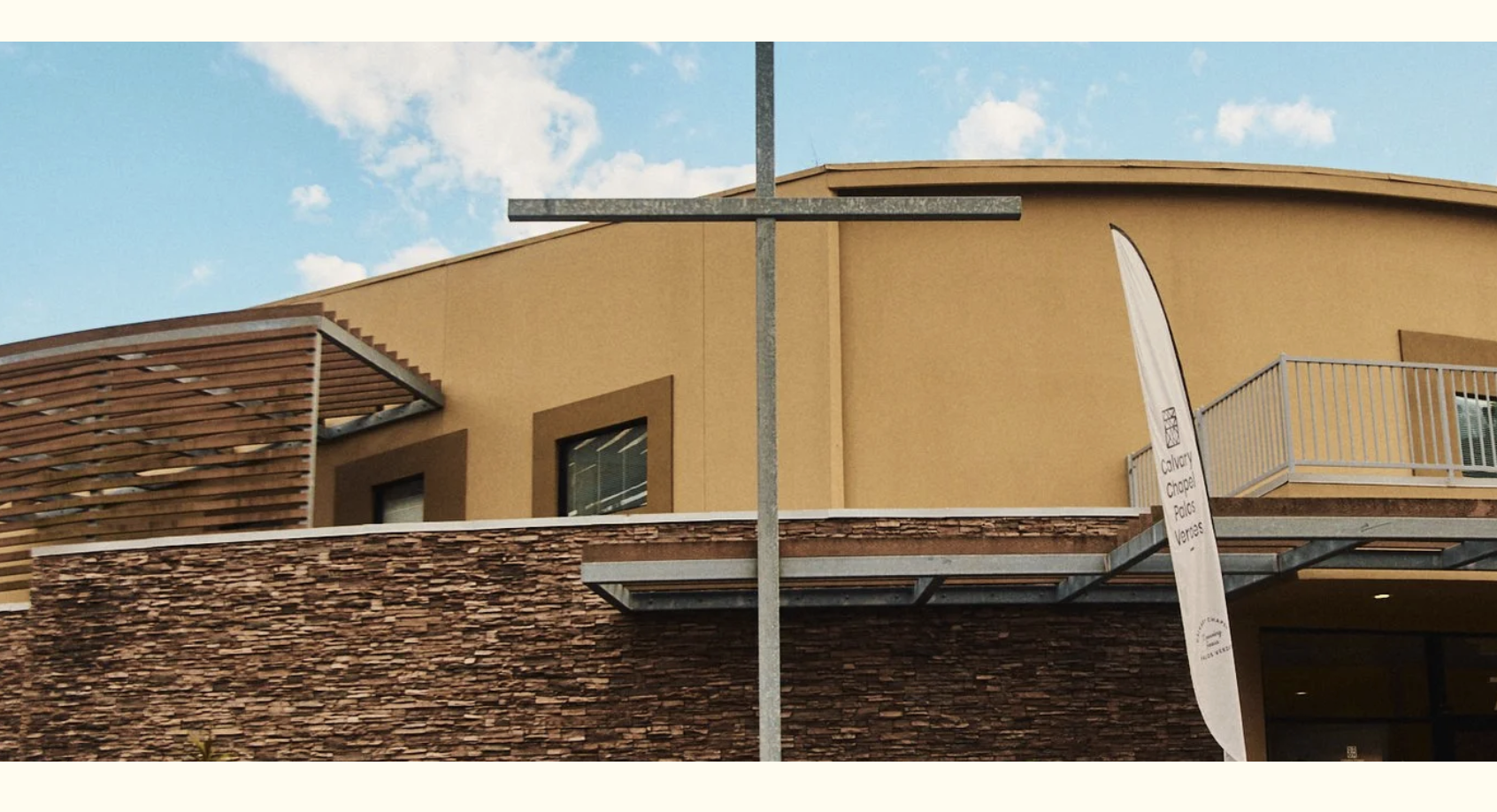
This message was prepared for Psalm 119:81-88, given to the morning Men’s Bible study at Calvary Chapel Palos Verdes on September 16, 2026:
If you want to turn to Psalm 119. And going here, we're in the kaph stanza. You want to say it right? It's kind of how I guess you say it. It's a K-H-A-U-F would be the phonetic. People make light of the fact that I live in San Pedro and we call it Pedro, which is not the proper way of saying it. And so when I saw the kaph stanza, I said "calf" like, oh, calf like calf or half — like, we're halfway through Psalm 119. How cool is that? That is not a scholarly interpretation of kaph.
Okay. And then let me go ahead and AirPlay this. Screen mirroring extended to one-to-three youth TV. Okay. Oh, yeah. Yeah. I've never worn one of these before. It's all the weight of sunglasses with none of the optical benefit.
Presenter view. Beautiful. Okay, so good morning. Does anyone want to read the stanza for us? And then I'll pray. Go for it, Garrett. Starting in verse 81: "My soul longs for your salvation; I hope in your word. My eyes long for your promise; I ask, 'When will you comfort me?' For I have become like a wineskin in the smoke, yet I have not forgotten your statutes. How long must your servant endure? When will you judge those who persecute me? The insolent have dug pitfalls for me; they do not live according to your law. All your commandments are sure; they persecute me with falsehood; help me! They have almost made an end of me on earth, but I have not forsaken your precepts. In your steadfast love give me life, that I may keep the testimonies of your mouth."
Thanks, Garrett. So, like I said, kaph, half. This is the eleventh letter of the Hebrew alphabet, making this the eleventh stanza of the twenty-two in Psalm 119. So if we look at Psalm 119 as placed halfway in the Bible, more or less, we're like at the halfway point of this psalm. And I think at the end we'll see that there's a bit of a hinge to heaven, as it were, where, particularly in this stanza, we're going to see how much the psalmist is looking for God's revelation, but he might be stuck looking at it in the general sense, rather than in the specific sense of His Word. Or as he gets to His Word, he realizes that God's revealing Himself by His Word, and he remembers that.
Hebrew letters have an embedded meaning in them. So when you look at kaph, it actually means palm. Yod — last week I particularly enjoyed the yod. You know, interpretation of yod: yod means hand, and so kaph means palm. And so if you look at it, it's cupped like a palm, right? And so in the literal Hebrew meaning we can have our palm kind of cupped and ready to receive. And so the palm is what we receive with. And so if we think of our palms open up in prayer, we're ready to receive God's presence, ready to see His Word. And so obviously, we have the Spirit living within us. So it's not a matter of posture per se, but that doesn't take away from the fact that there's some intentional meaning behind the way the letter is.
And there's also a metaphoric meaning behind it, which is suppression. And when I was doing some research into this and hearing it from a Hebrew scholar, it was amazing how fast he went right to works and to what we would call today mindfulness. Like, if you suppress yourself, you will be closer to God — even have a baritone voice. But I think it provides some effect. What does the suppression in our lives? Right when we repent and believe, grace is suppressing that cost of sin, right? So for us, I think there is that metaphoric application. We'll kind of see it in the stanza, but it was really cool for me to just kind of dive into the meaning of the letter itself, because I think, as we know in this acrostic form, that the kaph letter is going to start the first word of every verse in the stanza.
And so as I move through the slides here, you'll see in the lower little left here, I pulled out from the interlinear where the Hebrew word is in our English translation, because there'll be a little number, and then you'll be able to see the different forms of kaph in the letter that starts right to left, the Hebrew word that would have been in the Hebrew manuscript. So just a little fun note, but getting back to kind of our palm and receiving potential, and particularly being available to receive the full potential of God — you know, here's an illustration that if you were with me when we were here last fall, and I got to teach a little bit, my favorite illustration is my son and his athletic exploits. So this is Tae Cooley.
Number 15, which you can see right there. And here he has his palm ready to receive the ball. And this will come up later in an illustration for this lesson. But this was, I think, a good portrait of the psalmist. You know, Tae has moved up to varsity this year. He's a sophomore and he had a breakout season last year on JV — scored twelve touchdowns — you know, hadn't been at the school before. So he was kind of new, new kid on the block. And he came into the season I think with some expectations like, okay, I'm ready to go. And he found himself fourth on the depth chart for running back. And so he was kind of working out a funk that I think the psalmist is also going through, going, why me, Lord? Why isn't this my moment yet and whatnot? And so this is a game from two weeks ago that we'll see play out later. But this again — look at our hands. Are we ready to receive the Word of God and sort of run with the ball that He has given to us by His will, by statutes, by His law, by His teaching, etc.?
So let's proceed real quick. Getting back to that Hebrew scholar interpretation of kaph — you know, we talk about suppression. I actually think that scholar was taking something like the fruit of the Spirit and inverting it. One of the things I love about the way Rob teaches Galatians 5:22–23 is that the fruit of the Spirit is — and it goes love, joy, peace, patience, kindness, goodness, faithfulness, gentleness, self-control. And so self-control is like what the scholar was saying: if you suppress the will, you have self-control. But how would we jump from the fruit of the Spirit straight to self-control at the end, right? Actually, it starts with love. Everything starts with love, the love of God. And then love begets joy, begets yadda yadda yadda, all the way to self-control.
And so self-control is this wonderful end we arrive at. But it's spiritual self-control. It's not like white-knuckled mindfulness self-control. In fact, you know, Paul writes in Philippians 2:12–13, we're told to work out our own salvation with fear and trembling. We're not supposed to work out our own salvation with suppression. Suppression really is a gift, I think, that comes through trial, because ultimately we're being suppressed into a manner where we're needy for God, not necessarily needy for our own strength. So as such, I think the theme of this stanza, when we read it, you can look at it two ways. Are we looking at ourselves as the psalmist in this place of victimhood, or are we looking at ourselves as the psalmist prepared for victory?
We know the victory has already been won on the cross, right? If we came in here serving the Lord Jesus Christ, then victory is assured, right? And the battle's already been won. And we sang that last week. But I think the world tells us, look at all these circumstances and place yourself into this identity of victimhood. Thankfully, that's not what we hear here. We hear victory. So I think that's going to be revealed in the psalm today. Why don't we get it revealed to us?
So verse 81 — like I said here, here is the interlinear. And this is the first word that comes up in the Hebrew. But so "my soul longs" — when we put it into English, we see "my soul." So I just cropped out "longs" from the interlinear and there's kaph. So this form of kaph is there. So you see your little cupped hand. And that's a fully fleshed-out form with jots and tittles and all that good stuff, and we'll see those along the way. But "My soul longs for your salvation; I hope in your word." You know, so many times in the Gospels, people beg or plead — and what are they begging or pleading for? They're pleading for salvation. Right? Like your salvation — the psalmist here is talking about the salvation that comes only from God. So he knows that God is this provider, and he places a hope by grace through faith — in terms of our context now — and he places a hope then in the providence of God.
And so I think some examples we have that we can reference — you know, think of the woman hemorrhaging for twelve years, right? The bleeding over that long time. And she just had to touch the cloak. But she's pleading out for this deliverance of that condition. Or the centurion asking for his servant in Matthew 8 — you know, "not even in Israel have I found such faith." Or Jairus asking for his daughter. Or I wanted to read this one more extensively, the blind men in Matthew 20. Matthew 20:29–34 reads: "And as they went out of Jericho, a great crowd followed him. And behold, there were two blind men sitting by the roadside, and when they heard that Jesus was passing by, they cried out, 'Lord, have mercy on us, Son of David!' The crowd rebuked them, telling them to be silent." That's interesting. That'll kind of sound like the insolent we're going to hear about in a couple of verses.
"The crowd rebuked them, telling them to be silent, but they cried out all the more, 'Lord, have mercy on us, Son of David!' And stopping, Jesus called them and said, 'What do you want me to do for you?' They said to him, 'Lord, let our eyes be opened.'" I long for your salvation. "And Jesus in pity touched their eyes, and immediately they received their sight and followed him." So they hoped in the literal Word made flesh in Jesus Christ. And it got me to thinking — there's this idea that, you know, this was Rob's note about begging and pleading in the Gospels. Remember this: we do the pleading; God does the kneading, right? He's the potter. He's taking our clay and making something out of us that we're not going to rebel against once we're fully formed. The clay doesn't tell the potter, "You messed up," but He is working us out as if we were His medium. And so we do the pleading; He does the kneading.
Let's move on to the next verse. This is verse 82 — oh, I'm sorry, I went ahead. Before we wrap this one, I mentioned kind of the difference between general revelation and specific revelation. I think the soul here is longing on the psalmist's behalf for the specific revelation, because he hopes in the word. The word is God's articulation and revelation of Himself to us. You know, if we're just looking around in general revelation, you can see the evidence of God in creation. But how — you know, we're all image bearers, right? But we're not children of God until we are redeemed in Christ. So the psalmist, I think, is kind of drawing this, narrowing the scope of field from the general around him within which he lives. And he's seeking the specific, which is of course referenced here by the word.
Verse 82: "My eyes long for your promise." Okay? So like his soul is longing in this sort of — I think of it as like a radar. He's trying to pick up a signal, but my eyes now long for the promise. Matthew 6:22 — does anyone want to flip there real fast and read that or scroll? "The eye is the lamp of the body. So if your eye is healthy, your whole body will be full of light." Great. So — and it continues in 23: "But if your eye is bad, your whole body will be full of darkness. If then the light in you is darkness, how great is the darkness!" And so the psalmist here, he's talking about how his eyes long for the promise, and it's almost like he's a periscope, you know, out of the sub, like looking for the target. But if we have our eyes on the wrong things or at the wrong distractions, that's the darkness we can take in, right? That's the window into our soul. And the psalmist is saying, "I ask, when will you comfort me?" because I think he's trying to train his view upon God's Word. He is actually putting his plea into a specific quote here.
And how do we do that? Like, how do we go out and search? Are we searching for His Word by, you know, the shows we watch? Or even the Men in Motion — you know, are we searching in the activities we do? Are we searching for the fellowship within the activities we get to do, right? Let's look for like that story of taking the missionaries to Disneyland. Let's take Jesus with us because our eyes are looking for His Word wherever we go. The little note I put down here: when we think about the periscope searching for Jesus — lock on to that target, sailor. You know, and when you find it, don't you want to lock on? That's the whole point. I mean, that's what they're doing in the street right now, is locking on to mines and doing all that good work on our behalf. Okay, so let's go on to the next one.
Verse 83: "For I have become like a wineskin in the smoke, yet I have not forgotten your statutes." This is an interesting one because it's an illustration the psalmist is giving us that I think would apply really readily to the audience of the time. You know, there was an old tradition that David wrote this psalm, but there is no superscription in the Bible that says he did. So the more modern interpretation would be that David could have written it, or maybe someone later in the post-exilic period returning to Jerusalem wrote it. But nevertheless, "I have become like a wineskin in the smoke." What are wineskins? Back then wineskins were like the canteen of the day, made from leather and sewn together or woven together, however they were.
But I don't know where you guys store, say, your duffel bags that you do athletic stuff with. You know, ours go in the garage and they typically have like football pads or whatever in them. And so after a season or two, they're kind of stinky. This is what happens to wineskins after some amount of time in the context of the bearer — they're in either the tent where there's fire regularly to kind of keep warm, or they're in the home, which, you know, Jewish architecture didn't have great chimney design, so the smoke of just staying warm would ultimately settle. So it would go upon everything. And so the wineskins hung to be used, but not used all the time. Eventually the smoke would kind of just dry it out, crack it out. So it's kind of this portrait of the inevitable effect of the world which is passing away, that happens to our condition. And of course, we all know that — like, I'm 48, I know that I feel young enough to play softball still, but I'm wise enough to know I better manage it. Right? I'm like a wineskin in the smoke when I get on the field of play. That's what the psalmist is talking about here.
Excuse me. When he is regarding this condition he finds himself in — of just the inevitable, lasting effects of what the world is bringing upon him — "yet I have not forgotten your statutes." So at his core, in spite of the cracked skin, in spite of the weary nature, he is guided by and guarded through the statutes that are God's promises. The psalmist was referring to all the Old Testament Scriptures; we look at the whole counsel of God. Our ability to remain centered and grounded and have our identity placed in the statutes of God, despite the fact that there's more gray here than there once was, or there's less up here than there once was. I mean, we're talking about how you're counting them and the number goes down. I mean, God knows the number today, but we all learned last week — that's a little less today, right? Terry, thank you for your vulnerability.
David wants to ask — Psalm 13:1–2: "How long, O Lord? Will you forget me forever? How long will you hide your face from me? How long must I take counsel in my soul and have sorrow in my heart all the day?" And it gets back to this sort of contrasting theme of: are we going to read this stanza like victimhood? Are we going to read it like victory? But again, verse 83 at the back half of it: "Yet I have not forgotten your statutes." And in that psalm that David wrote, Psalm 13 at verse 5, at the end of it he declares his path to victory: "But I have trusted in your steadfast love; my heart shall rejoice in your salvation." Again the steadfast love is told to us through the statutes of God. So we have this grounding to know it. And also, in spite of David's plea that God has hidden His face from him — you know, and maybe that was written in his sinful grief after what he did with Uriah and Bathsheba — we have Colossians 1:15 to tell us that Jesus is the personification of the face that was once hidden, now revealed to us. Colossians 1:15 tells us He is "the image of the invisible God, the firstborn of all creation." So we are encouraged today to know that when we're talking about statutes, God has not let us forget, because we are living in His Word. They all point to Jesus Christ.
Little testimony time. Hopefully I can do this promptly. I felt like a wineskin in the smoke, or I know the condition of being a wineskin in the smoke. I had worked in media for thirty years. I felt practically finished in the last several, and I felt that God was going to do something with me for this upcoming season. You know, going back to high school I started in music, and then I got into video and then that went to screenwriting, and then I worked in television, and then I had a production company, and then I got another production company, and we made some films. And there are so many stories I've gotten to tell in these thirty years where I think I was pleading and God was kneading, where ultimately I felt like this kind of chimney sweep of telling the world's stories — you know, for clients that were great and clients that were Red Bull and were not so great. I mean, they asked a lot of you, but they never — you know, you're just a number.
And so ultimately, I've been loving His statutes, not forgetting them. He's given me a new season that started last month where I got to start a new job. This new job I have is being the executive director of the Pregnancy Help Center in Torrance, which is like in some ways you think is the furthest thing from working in media or marketing and doing storytelling — except that I get to now tell the story of the sanctity of life to women who don't yet know it. I mean, I don't tell it, but our trained medical staff and our wonderful volunteers get to do that every day to women who think they might be pregnant or are pregnant and need the encouragement and education that life is the option in that way. That's me knowing, okay, I was as crackly as this parched producer, and now I get to be a providential servant through this organization. And so if you're in that wineskin stage, feeling smoky, like God's doing something with you — it's okay to plead because He's going to do the kneading. So that's going to encourage you that way.
Bless you. Part of that story I get to tell now — I mean, this is one of like almost like a memory verse for the work — Psalm 139:13–14: "For you formed my inward parts; you knitted me together in my mother's womb. I praise you, for I am fearfully and wonderfully made. Wonderful are your works; my soul knows it very well." These are among the statutes of God, right? This definition of how we were knit together — the kneading started right at conception for each one of us in this room. We get to go encourage that very one outside. In fact, I didn't actually take my sweatshirt off today, but I wore a work shirt and this is my little satirical riff on Planned Parenthood that says "Providential Parenthood — life no matter what," right? Because that's the lie that Planned Parenthood is telling everyone right now: that they give care no matter what. No they don't. They commodify life no matter what. We get to go tell the Word of God, the promise of Jesus Christ, the gospel news that there is life no matter what — first corporately, by bringing life into this world, and then spiritually through spiritual rebirth by the good news of the gospel. So I'll zip my scripture back again. You know, it's like a little Superman thing, right? Let's proceed.
So again, I talked about thirty years of kind of being in the waiting. And the title of this message is "The Waiting Is the Hardest Part," which if you're a Tom Petty fan, you'll remember that song. "How long must your servant endure?" And then the kaph is here. So this is one of the instances in the Hebrew where the first word was the letter. So when we talk about the acrostic and everything launches out of the letter, this actually happened at the beginning of that particular stanza there. Verse — how long? What does long mean?
I think Job wanted to know how long in his experience. You know, he had all this. He was identified for righteousness. And God knew that he would be His instrument in revealing His sovereignty to Satan. But he was going to take a measure of time, and it's certainly going to take a measure of trial. Job ends up asking in Job 10:20: "Are not my days few? Then cease and leave me alone, that I may find a little cheer." If we're looking at the first half of this verse in this sort of prism of victimhood, reading ourselves into it — yeah, you're going to wonder when does it all end? Like, what — make the pain stop? Certainly, Job had an experience, a trial that far exceeds what I've ever gone through. And yet his wonderful declaration, some thirty-two chapters later, is that "I repent in dust and ashes. I know that my Redeemer lives." God is doing something through us in this kneading, and let our plea not be just "leave me alone and let me die," because that was Job's big mistake. And he ultimately got rebuked for that. You know, who do you think you are? And where were you when I was God and I did the God things?
What did Jesus say about persecution? Because persecution was going to come. And this is what's happening in the back half of this verse. "How long must your servant endure? When will you judge those who persecute me?" Well, John 15:18–19 reminds us — these are Jesus's words: "If the world hates you, know that it has hated me before it hated you. If you were of the world, the world would love you as its own; but because you are not of the world, but I chose you out of the world, therefore the world hates you." We have been, as humanity, at war with God since the garden. So Jesus carries — when He descended from heaven and added humanity to His deity, He brought forth this — He stepped right into the battlefield. Yes, Craig, what is that citation again in John? John chapter 15, verses 18 and 19. And so Jesus is reminding us again through the whole counsel of God that persecution is going to come to us. It's inevitable. But again, if we're —
I thought that might happen. This is why when Johnny says use propers, you listen to him. It's got the little Apple wheel of patience. How long must your servant endure? Still enduring. All right, well, we'll see if it comes back. Beautiful. Okay. And then — currently mirroring. Let's do that. Screen scares me to death. There we go. Okay. Beautiful. Okay. We had to endure about ninety seconds for that technical difficulty to resolve itself.
Here's the thing about God's timing and how long we need to endure. 2 Peter 3:8–9. This is a tremendous comfort. It comes to us when the church is being persecuted in the first century after — this is the encouragement that came from the post-Pentecost Peter: "But do not overlook this one fact, beloved, that with the Lord one day is as a thousand years, and a thousand years as one day. The Lord is not slow to fulfill his promise as some count slowness, but is patient toward you, not wishing that any should perish, but that all should reach repentance." So how long must you endure? God knows the number of the days, right? We don't. And He gets to know. He knows when Jesus is coming back. When will God judge those who persecute me? It's His job. Let's let Him do it. We are not conscripted here to be the judge-makers, and I think this next verse particularly draws that out.
Okay, kaph here in this — "The insolent have dug" — kaph is under "dug." So the word "dug" here starts — the swing goes this way and there's little jots and tittles. "The insolent have dug pitfalls for me; they do not live according to your law." Okay. So let's talk about pitfalls first. Pitfalls — this is Hebrew poetry. And again like the wineskin, this is another sort of illustration the psalmist is using to describe sort of the travails he's encountering in life. Pitfalls were deliberate mechanisms to trap big game. You know, the hunter would go out and dig the pitfall. And the intent was to kind of let the gravity and the ensuing fall and any sort of pokey stuff take care of the animal that would otherwise be difficult to conquer on our own. And so the psalmist is saying the insolent are digging these pitfalls for him.
Well, let's — I've got a quick little illustration of what the pitfall is. Hopefully, if this will play. Does anybody remember this movie The Edge with Alec Baldwin and Anthony Hopkins? Okay, it's okay if the volume doesn't have — that go on this. I thought that might be the case, but this is what a pitfall is. Come on computer, you can do it. Okay. The pitfall sometimes is the pause button you press accidentally. Okay. So this is kind of later in the movie. And he has betrayed Alec Baldwin. Don't worry about the sound. It's okay. He's basically thought he was going to surprise him out in the wilderness, and he's going to take him out with this gun, but in his hubris — that is a pitfall. He falls out for the deadfall. This is what the insolent are by illustration creating for the psalmist out in the psalmist's existence.
So what does insolent mean? Well, insolent means arrogant, and the word insolent has actually come up five times. This is the fifth time it's mentioned in Psalm 119. It'll be mentioned once more in the back half of the psalm. And I think it's important we look at what insolence truly is, because, you know, we could think of arrogance as yet the whole world is arrogant against God in their denial and the darkness in which they once were — or once we were — and that the unbelievers in Jesus Christ still are. That's true. But I think because the psalmist — this is a psalmist who lives in Israel, this is a community that's fairly homogenous. And this is a place where this was the land that the Israelites were either in under King David, if he wrote the psalm, or had returned to after the exile to rebuild. The insolent — let me put it this way. You might recognize this quote: "I have met the enemy, and he is us." The insolent are not the church, but the insolence is the flesh any of us bring into the church.
It is the discouragement we bring when we critique or criticize. Daniel wisely says criticism is not among the spiritual gifts. James 3 tells us, tame your tongue, right? Insolence is the arrogance we bring when we think we can tall-poppy a brother in it. You know, the way I like to put it is this: the meme for my life is there's God and I'm telling God to hold my beer. I got this, God — let me go do it on my own strength. Let me go do it in my own wisdom. That's insolence, because it's actually arrogance among those who ought to know better. You know, Peter, when we were with Cornelius — Jesus intervenes and says, don't call common what I have made clean. Okay? So we are charged to go bring the good news and do it very simply. Our insolence is when we are not living according to Your law. So how does the psalmist know that he's sitting opposite to this? Well, it takes one to know one, right? The psalmist was once living in darkness, too, and in this moment, as we see, he's not going to stay in this identity of victimhood. He's taking us through the Word toward victory.
But let's not be the insolent among us. James 4:1–6, I think, puts it perfectly, and it's kind of a bit, so I'll read it: "What causes quarrels and what causes fights among you? Is it not this, that your passions are at war within you? You desire and do not have, so you murder. You covet and cannot obtain, so you fight and quarrel. You do not have, because you do not ask. You ask and do not receive, because you ask wrongly, to spend it on your passions." So essentially they do not live according to Your law. None of us can live perfectly according to the law. Jesus is the fulfillment of the law, and we live according to the righteousness that is added to us. Pastor Wade made this great point in his teaching on that Saturday: that it's not just salvation. When we recognize that our sin has been accounted for by the blood of Jesus, that's the wonderful beginning of it. The fulfillment of it is there is righteousness added to us. So living according to the law is living into this righteous identity that Jesus has given us by the righteousness that's added to our condition.
Now we don't go out and bear — you know, because Mike Cooley says it — you know, life has sanctity. Well, no, that would be sanctimony, right? But because Jesus was the one who was there at the beginning and formed us with God in our mother's womb, that's the embodiment of the law and the righteousness we are to live again. So he's really criticizing, I think, the condition of the flesh, even though he's personified it in his discouragement in this moment.
Okay. Verse 86: "All your commandments are sure; they persecute me with falsehood; help me!" Okay, again, here's kaph in "all." So another instance where it lines up with the beginning of our translation. We'll get to how I think he's describing the tactics of insolence. But the premise is that all of God's commandments are sure. And what does sure mean? Well, think of it as the kind of stance the goat has on the cliff — a sure-footed animal. We know just by — it's not the goat's horns that keep it well poised on a cliff we could never climb. It's the fact that he was designed intentionally for the purpose of having that kind of comfort in that situation, which looks so dangerous. That's the sureness of the Word of God and the commandments He's given us. There is nothing left. There's no missing potential in the expression of God by His Word. The Word is inerrant, right, in the original manuscripts as we have them. There are no errors, as Daniel has taught us. You know, you go from God's revelation, which is sure. And then we go into interpretation where we go and start to interact with His Word, and we're processing it through our whole body and condition, and then we're applying it to our lives. And so in those two instances, that's where the variability comes. But in terms of His revelation, the sureness is the fact that it is complete and it is perfect.
So they — when we're talking about the tactics of the insolent — "persecute me with falsehood; help me!" The point I wanted to make here with regard to the tactics of insolence is getting back to kind of discouragement. CCV probably has a perfect record, as far as I know, of not having weapons, guns — even with Men in Motion, like that's going to take place off site, right? We don't have people bringing guns onto our property to harm us. In fact, the closest we got was that shooting down the street. And what did the church do? It did the right thing: sheltered in place and waited for the right moment to take the flock into safety. We bring in gossip and slander by our flesh, whether it's how we're posturing out of this body in the world and sort of puffing ourselves up, or whether the insolence is among us, and we're just discouraging one another by our impatience or our unkindness or whatever that might be.
Again, criticism is not among the spiritual gifts, and so we're making things up that are contrary to God's identity in the body of Christ, and contrary to the encouragement we bring to one another through falsehoods. And so the psalmist is pleading out to God here at this point: help me. I'm finding in this condition in life that I'm at my wit's end. It's actually the point I want to make at the beginning of the stanza. The psalmist is literally at his wit's end at this point, and so I think we can all relate to that. Like if we're going to cry out for help, who are you crying out to help for? If we're going to cry out to our brothers for help, we're really crying out to them because we know it's God's Holy Spirit living in them that's giving them the power to encourage us, because there's nothing really material we can do that's not going to be backed up by the eternal strength and weight of the Holy Spirit. And so the psalmist here is pleading out directly to God for this help, because all these conditions — this wineskin condition he's in, this long endurance of the earthly trials and travails — it's bearing down. It's weighing on him. He is pleading to the Lord for help.
Okay, second to last verse. "They have almost made an end of me on earth, but I have not forsaken your precepts." The kaph is right here. So there's the first word. And then — yeah, the way the combined words is really fascinating. I have a lot to learn. The operative word in this verse right here is almost. I was driving last night listening to the radio, and the song came on and I had to look it up who did the song, but it was "Constant" by Maverick City Music, and so they had this lyric — let me make sure I read it because I want to see it accurately. I have it myself in my notes: "Constant" by Maverick City Music. "When I think that I have reached my ceiling, I know the scars only mean that I'm healing." That's pretty clever.
The scars are not our marks of permanence. We'll have a new body in heaven; we'll have eternal life. But what happens when we kind of dress the wounds — what happened by the benevolence of the Good Samaritan — is that all those wounds are taken care of because we have this healing process in us. And so when the psalmist is saying they have almost made an end of me on earth, the almost is this realization that he's still drawing breath, he's still here. The end is not nigh. The end hasn't happened. He wouldn't be able — you know, Pirates of the Caribbean: Dead Men Tell No Tales. He's still here to write not only this verse, but the next one and the whole back half of Psalm 119. It's not over. In the worship song we sang this morning: Bless the Lord, O my soul — still my soul will sing Your praises.
This is the pivot for where, when he has cried out for help — "Help me!" — "They have almost" — they is just the world; they is not anyone named specifically, but it's the opposition to the godly man in godliness. "They have almost made an end of me on earth," but almost is not fully. They haven't done it. And so at this point where he's still drawing breath, where he's still ascribing this poetic testimony — "I have not forsaken your precepts" — all the work that God has been doing through the psalmist, by His revelation of the Word, to regard — to have this almost regard the Lord through faith — there are these truths that are emblematic to the life of the godly man. And so when we find ourselves in this, in the valley of the shadow of death, "I fear no evil." Well, do we lack fear because we've generated strength on our own? No. And like the Hebrew scholar was saying, well, you must suppress — no: "Your rod and Your staff, they comfort me." That is the God, the strength of God by His precepts, that is with the godly man who is not forsaking Your precepts.
You know, it's like if you ever see a movie clip where there's like an atomic explosion, you know, or like Oppenheimer, you know, and they got the glasses on — you kind of like — this is the moment at which the psalmist, I think, is peering out, because that blast wave has kind of gone by, and he's almost surprised that he's still there. We shouldn't be surprised that God's precepts and His goodness remain with us, and they actually are the care and comfort for us. In Lamentations 3:22–23, there's further evidence of this in God's faithfulness that reads: "The steadfast love of the Lord never ceases; his mercies never come to an end; they are new every morning." When you woke up this morning, did you remember that you — like the breath in your lungs — is the God-given breath of life? That is the mercy that's new this morning. Even the darkness that requires headlights to transit from wherever our homes are to this place of fellowship. "Great is your faithfulness. 'The Lord is my portion,' says my soul, 'therefore I will hope in him.'" Well, it's only three weeks ago that we were in "the Lord is my portion." So this psalmist and that other psalm are aligning in the sense that we have that righteousness from Christ that is our portion in Him — not for us to possess, but for us to promote and proclaim.
So verse 88: "In your steadfast love give me life, that I may keep the testimonies of your mouth." Okay, finally there's that. There's the kaph. One hand. The testimonies of God's Word are the recognition the psalmist has given to the Word in this stanza. In verse 81, it was the actual word; in verse 82 it was the promises of God; in verse 83 it was the statutes; in verse 85 it was His law; in verse 86 His commandments; and in verse 87 was precepts. Those are these testimonies of Your mouth. The mouth is of the one mouth of God, as expressed through specific revelation, through His Word that regards the steadfast love. You know, as we just saw in Lamentations 3:22, God has no difficulty being faithful, but we are so easy to be forgetful of that. So kind of drawing towards an end — remember, kaph. Kaph means palm, like the palm of your hand. And that illustration I had earlier was a sort of readiness to receive. So I mean, kind of as we — I'm not quite done, but I want you to kind of approach the discussions here. You know, think about that readiness of the emptiness of our palm, but their readiness to receive the goodness of God in a wonderful way.
This is like the best part of the PowerPoint. No more slides. It's more football. Come on, come on, come on. Bear with me. Almost there. As we think about how when the Holy Spirit inspired the Word of God, there's all these wonderful layers and ways in which that Word has significance. Down to the acrostic — it wasn't just a, you know, mathematic mechanism to organize a treatise. This is a narrative arc through poetry that the psalmist is telling us over the course of Psalm 119, which is going to take this group, however long through the end of this year, to complete. Okay, good. Sorry. And so even that significance of the letter — it's not too much to — I was like, okay. It's like okay, cool. It's not over-spiritualizing to say kaph means palm. And this whole stanza refers to this sort of readiness after patient endurance — you know, the waiting being the hardest part. How do we receive it? Like I said, we can look at God's Word. And I think those who are looking at it and aren't being drawn in by the Father might look at God's Word as the fool does and think, yeah, I'm a victim. What is this doing for me? What we see in God's Word, the whole counsel of God, through this whole grand narrative, is a victory for redemption for our sake by the blood of Jesus.
And so, getting back to Tae's hand here, this kaph and the ball opportunity in ministry — and I talked about his sort of arc of thinking he's the heir apparent, thinking he's ready to go. First couple games he's bummed because he's not starting. This was the play that ensued that I will queue up and play for you guys. So this is Tae right here. Okay. Because I don't think we'll have audio. And it may or may not play clean. This is again — I might do this. Okay. Yeah. There you go. Okay. Now I know that was choppy and I know it was broken up, but we've all seen highlight reels. Here's the point of this clip when it finally completes. Okay — Tae has had a 47-yard run. Winning right — 50 to 20 — and they're losing now. Okay. Ding ding ding. Second carry of the season coming out of his funk of oh my me, why do I have to wait, I want to start so bad. Second carry of the season — 47-yard run. The victory is already assured.
Guys. He does this when they're up by an insurmountable difference. This is the score that Jesus has put on the board. When we go out today — our longing to have this run and not even result in the score — it's still the effect of what God is doing in our lives. The readiness of the hand to take the ball was the encouragement that brought him the satisfaction that you will see in these pictures. God bless Valley Christian. They've got a wonderful photographer alum who happens to be in the right place at the right time and then makes these freely available. I mean, this is us with the ball running in the context of ministry as we go out from here in life. Doesn't matter what the scoreboard is — he's now got the confidence of God's Word to carry it, to address the adversaries that the enemy is going to bring — the schemes of the devil. And, you know, at the end of our lives, when we want to hear, "Well done, good and faithful servant," it's because we're going to go down swinging, not because of our own strength, but because of the fact that we are equipped by this eternal Word of God, this eternal truth that is sure. We know it through the person Jesus Christ.
We have it by the Holy Spirit living within us, that when we have these ready palms to receive, that's the filling of the Holy Spirit we should be praying for today. That's the wonderful thing about this kaph stanza, is that this is halfway through Psalm 119. The psalmist is ready for a filling in a sense, as we can receive it. And that's essentially the sort of way I want to wrap up — as you go into tables today, I'll pray us out. But as we go into tables today, maybe we can — regardless — what readiness do we have? How ready are you for that filling? What kind of plea are you making to God so that He's going to knead you either on this day or tomorrow, or from what you're wrestling with, with what happened yesterday? So He's molding you into the missionary, the mission worker, the Great Commission effector that you're called to be. I think that would be great to kind of discuss with the groups, but why don't I go ahead and pray us out.
You know, spoiler alert, because you're teaching next week, right? Everything about the word from here on out. As I was looking at the whole psalm and researching, the psalmist places the word in heaven — like we've — this has been the last point at which in Psalm 119 he's looking for the word on earth, looking for the word earth in general revelation. He's got clarity to fix the word in heaven, because that's where the word came from, right? He descended on down. So spoiler for Gil that doesn't steal your thunder, I hope. But it's going to be exciting to proceed through the rest of the psalm together.
Let me pray. Father, thank you for this morning. Thank you for this stanza, these eight verses, to relate so well to the condition of the psalmist, and then to regard so well the position of the believer. We are made righteous by the blood of Your Son. We are so grateful for the accomplishment of His work on the cross, and we are ready, with our hands open, to receive more of Your Holy Spirit and to bring it out amongst our community — to our Jerusalem, our Judea, to our Samaria, and even to the ends of the earth. Thank you for this church. Thank you for its ongoing ministry, and thank you for the chance for us to grow in relationship with You and one another by Your Word and through Your Spirit. In Jesus' name I pray. Amen.