
Do for (the) One
About 10 years ago I went to a Catalyst West conference at Mariners Church in Irvine, CA. I can’t quite recall if I went once, twice, or three times altogether, but it had its impact at the time. It’s where I first heard and saw All Sons and Daughters play, when they were on their way up. It was where Dallas Willard gave my wife and I a great proverb and demonstration of faith that we continue to recite to one another to this day (I’ll make that the subject of another post). And it was the first exposure I had to the likes of pastors Craig Groeschel and Andy Stanley. Catalyst certainly revolved around a mission for spreading the gospel, and these two pastors were close to its nucleus through accessible, motivational preaching and teaching.
This isn’t a post to assess where I have or have not observed those two as pastors since then, admittedly other than mentions in news, outside of those conferences I didn’t follow them in particular. Which probably serves to more easily highlight something Andy Stanley promoted one of those times we were hearing him speak, because I took it and kept it as a motivational instrument for some years afterward. It was such a good quote at the time, I am glad I didn’t muddle it with a bunch of other pithy encouragements.
He said, “Do for one what you wish you could do for many.”
It served as a great relief to bring the practical application of evangelism into plain pragmatism. Especially at a “hip” conference at a massive church, in a venue fit for motivating many people, it drew down that truth of the one in the 99 that the shepherd is willing to seek out to save.
As I’ve pondered the point in years since, I’ve recognized that I’ve taken that proverb of motivation and at times made it into a work. Escaping works-based righteousness is common for us all, to know that we are saved by grace alone through faith alone through scripture alone in Christ alone to glorify God alone is our true religion.
So lately I’ve developed a hybrid mentality to applying this wisdom that Andy Stanley offered. Yes, it remains certainly consistent with the latter part of the greatest commandment to “do for one what you wish you could do for many” as supporting “love your neighbor as yourself.” The lateral application of agape love should reach out to your brother and sister without expectation that it turns into anything more massive that encouraging them in the faith and meeting them in their needs.
But let’s not forget the prior art in the greatest commandment, that is as Jesus articulated in Matt. 22 to “Love the Lord your God with all your heart and all your soul and all your mind. This is the first and greatest commandment. And the second is like it, “Love your neighbor as yourself.” All the Law and Prophets hang on these two commandments.”
Before we, through altruism, maneuver to do for that one here on earth, we should remember that it’s by His grace that we are able at all to do for that one here on earth.
So, in the fearful love of God the Father, with all our heart + mind + soul, made righteous by the blood of Christ Jesus, our faith becomes the response of obedience to the Lord through love so that we might do for many. He is our hope and strength to make disciples of all nations.

Please Read the Letter
I should have known better. Perhaps I did!
Alison Krauss & Robert Plant told me so in the very least. Their song as named in the title of this post goes from verse into chorus with the lyrics, “Please read the letter, I wrote it in my sleep, with help and consultation from angels in the deep. Please read the letter that I wrote.”
Of course, the song itself has their harmonies delivering the plea, rather that my quote in a blog, so I recommend a listen if you’ve never heard their duets.
Back to the topic at hand, moving through my hermeneutics textbook, we’ve gone from Old Testament into New Testament, through the gospels and into Paul’s epistles and the similar letters. A great takeaway is to remember that these are specific correspondence letters written from his pastoral encounter with the various audiences and churches, from the Ephesians, to Corinthians, et al.
That they serve as the inspired, inerrant word of God is such a blessing to us in revealing His truth and promoting our relationship with Christ.
Part of that blessing does tether us to the context of how these letters were written to a specific people, at a specific place, in a specific time, regarding one or several specific issues.
The advice I’ve taken from improving my interpretation is to avoid going too abruptly to the chosen verse or phrase in favor of giving over the time necessary to read the respective letter.
Imagine you receive a letter from someone you have a personal relationship with. You don’t jump 2/3rds of the way through the contents as if it were a treatise or textbook. In fact, because it’s so personally-directed, a wholesome intake of the entire body of the letter naturally suits the reader/recipient so that the most cogent points may land in their fullness. How Paul frames his epistles often tells us the pertinence of the writing and explains the circumstance, both temporal and topical.
A good frame houses the picture, and often together they are seen as a whole rather than an arbitrary structure to place an image within.
A personal example can be taken from serving in a congregation last year in the laity. Walking in the process to seek out fruitful prospective leaders for His bride, the pastoral epistles drew increasing focus from me to best understand and confirm the character of a servant. What accumulated was a season of disagreement that these epistles mattered (if not the authority of the Bible altogether for the sake of preferences and tradition [but that’s a whole other Oprah]), but what convicted me throughout was to remember that, in the case of Titus for example, Paul was writing to Titus, not to me. Instructions given over to Titus were for the situation the two pastors were contending with in the growing new church of the late 1st century AD. Setting aside the fact that in his will, a consensus to even put the Word on the highest footing was elusive in this episode, God worked His will for the order I believe He wanted. He wanted disciples, and so I know at last I followed Christ, taking up a cross in the process.
That’s why each epistle deserves to be read in its fullness. Though it was Paul writing to Titus, or Timothy, or a church, it is the Word of God written to us as Christ followers so that we may know His fullest grace extended to us by faith in Christ Jesus.
Coming into a bible study early this year, that happened to be on the letter to Titus, I was reminded that the weapon of the word is to convict my own heart to be of the characteristic spoken of in these letters in the context they launch from. So yes, they speak to discernment, it speaks to the approach to promoting doctrine, and yes, even instructions to Titus related to rebukes and standards are present. But I appreciate that the context doesn’t make it my weapon to wield in a legalist’s inquisition, but a weapon to counteract sin in my life that the pastoral epistles may have their intended effect. The whole letter then makes this plain where a jump to one verse absent the spirit of the context might short circuit the purpose.
Let’s encourage the habit to read the whole letter as often as possible alongside the reference of the target scripture so that the fullness of meaning may reach our heart and impart the complete blessing!

Tales from Sardis
We are meant to be a city on a hill that cannot be hidden as the Lord taught in the sermon on the mount in Matt. 5:14-16. And yet, a city on a hill is exactly the target of the enemy. It comes with a nice view, typically fortified on top of favorably topography, and ultimately serves as a wonderful trophy in the ongoing warfare of conquest in the earthly realm.
Taking away lessons learned yesterday from church, we read through Revelation 3:1-6. This encompassed the letter Jesus dictated to the apostle John to send to the church of Sardis. It goes without saying the photo I chose for this post isn’t Sardis itself. It’s Orvieto, located in Tuscany, Italy. But as a stand in for Sardis, it will do!
As we learned, the city of Sardis was known at one point a really big deal in Asia Minor, if not one of the most influential cities altogether over many centuries BC. By location and design, it was that city on a hill and leveraged its fortification and fruitfulness to project influence in its region. More often that not, it was able to thwart threats thanks to its intrinsic defenses and steadfastness. Cyrus’ siege of Sardis in 549 BC provides a useful analog to the pursuit the enemy has on the many “cities on a hill” today in the population of long-established churches (be they congregations or denominations). Through Cyrus’ patience and cunning, a small weakness exposed through a lone, sleeping guard on a secret passage into the city provided the access needed to catalyze the takeover. This chink in the armor of the city’s defenses was the critical weakness that would give the city over to Persian conquest. Overwhelming force doesn’t always arrive like Omaha beach in Normandy.
The rise and fall of the city of Sardis is analogous to our own walk in dependence on Christ. We may be built up over time, but if we begin to rest on our laurels or point pridefully to fruit without realizing the impact of His providence and protection, we became vain and hollow. If we are to let hubris manifest because we review ourselves as established by anything other than His authority through grace, we are deceiving ourselves into a lull where a siege will come. Jesus’ rebuke of Sardis set aside His knowledge of their works, and their earthly reputation of being alive. It was all in the past, and the Lord was holding them accountable in the present that they may be spotless in the future. He knows best if we are walking in the Word AND the Spirit. If, as a believer, you have one without the other, beware, repent. If as a church you meander toward one without the other, watch out. We are called to remember what we heard, and repent.
He comes like a thief in the night, so today is the day to take stock in our readiness. Are we repentant? Really and truly? So that Christ alone remains our hope?
Do you cast off your resume, reputation, and rewards on earth for discipleship? Let’s not each of us be the sorrowful rich young ruler unwilling to part from accumulated glories in the flesh.
How about as a body in Christ? Does your church marry the word and the spirit together? Or does it just say it does. As our pastor reiterated to our assembly yesterday, “a church with only word and no spirit will shrivel up, a church with all spirit and no word will blow up, and a church with both word and spirit will grow up.”
It gets me back to the point of Psalm 1 as it sets out the psalter and I reflect on the draft exegesis paper I just submitted for class… if we delight in the law of the Lord and meditate on it day and night, we are meeting his commandment with the power of the Holy Spirit. What a gift!
It’s not programs, attendance, vision statements, business acumen, budget surpluses, or anything else that becomes the fruitful representation of Christ Jesus… it’s the pure discipleship. Love God, love others.
With repentance, the church in Sardis would be that tree of Psalm 1, planted by streams of water (and transplanted really for no tree plants itself!), bearing its fruit in season, and its leaf does not wither.
Even in the rebuke, this letter in Revelation tells us the Holy Spirit can’t be killed, even though He must not be grieved. That remnant even in a dying church like Sardis, where the Word and Spirit is represented by small number of people who have not soiled their garments, who themselves are repentant… they will be walking with the Lord as he finds them worthy.
With its mention of the book of life, Jesus focuses in on repentance as an intersection of law and gospel. There is conviction of our dying nature and gospel glory through faith in Him alone… if ever there was a cautionary tale, it was this letter from the Lord to the church in Sardis.

Interpreting the Imprint
In the renewed pursuit of higher education, specifically that of the Masters degree I seek to obtain, the meaningful hurdle arrives soon in the first draft of an exegesis paper I’ll be writing on Psalm 1.
From the NIV, “1 Blessed is the one who does not walk in step with the wicked or stand in the way that sinners take or sit in the company of mockers,
2 but whose delight is in the law of the Lord, and who meditates on his law day and night.
3 That person is like a tree planted by streams of water, which yields its fruit in season and whose leaf does not wither—whatever they do prospers.
4 Not so the wicked! They are like chaff that the wind blows away.
5 Therefore the wicked will not stand in the judgment, nor sinners in the assembly of the righteous.
6 For the Lord watches over the way of the righteous, but the way of the wicked leads to destruction.
Commonly ascribed to David as the author, the six verses say a lot about ordering oneself under the Father. I look forward to the task of analyzing the historical context, cultural, and literary contexts that give accuracy (I pray) to the interpretation I’ll present.
For the moment, however, how does this Psalm, through the Holy Spirit, speak to me? How might it speak to you?
From verse one, blessing reaches the one who “does not walk in step” with the wicked. As we know, Jesus co-mingled among sinners, but never appropriated sinful behavior to stoop down to unrighteousness. We’ll never withdraw sufficiently on earth to be devoid of some sin in any context, after all we bring it in to any situation through our own unrighteousness through pride et al. But verse one provide effective caution to point forward to when Jesus will discuss the selectivity of justice through descriptions such as the narrow gate (Matthew 7:13-14). “Walking in step with” or “stand in the way that” points to a subscription to the flesh that subordinates the law. If sanctification means something to you as a believer, this first verse is a great guideline to recognize temptation and avoid sin. Verse 2 poetically concludes the initial point that the “law of the Lord” brings delight, particularly through constant meditation. Here we can take instruction that legalism isn’t the call to action, but personal conviction of our own heart through regular meditative relationship with God.
Verse 3 takes up the ecology motif so common throughout Scripture so that we can promptly recognize the example of strength in faith. When I walk through Point Fermin park near our house, it juts out enough to still have a lighthouse on it, but the park itself is recognizable by numerous massive fig trees, each easily over 100 years old. These trees are akin to the description in Verse 3, their impressive, they are known by their fruit, and they seem to endure the municipal seasons of Los Angeles parks and rec.
“Not so the wicked!” brings a contradiction to the opposite binary image. As winter rains have passed through recently, this season has brought wind as well. Imagine the tumble weeds rolling along in the midst or aftermath of this kind of weather. Just like chaff, these victims of circumstance lack a rooted foundation, and are so typically lifeless, brittle, and dead on appearance.
If we take on a satisfaction to be blown about in this manner, we are accepting a fate that upon judgment, will bring eternal consequences. Verse 5 connects the uprooted compost fodder to the way sinners will stand out in the assembly of the righteous.
Now, we know, by grace through faith through Scripture through Christ we glorify God alone, and it’s Christ who makes us righteousness by his death and resurrection. What a gift. And thanks to the gospel of John, chapter 1, verses 1-5, we know that Jesus was with the Father in the beginning and is with the Father watching over the righteous, what sweet relief to know it’s not up to my power, or your power, or really our mutual lack of it, to save.
What remains at the end of verse 6 as we involve ourselves in the present fallen world where the truth of Jesus is known and we pray spreading, we have the accurate, reliable, faithful forecast to avoid the “way of the wicked that leads to destruction.” That way of the wicked traces all the way back to the first sin in the garden when the crafty serpent convinced Adam and Eve that God’s command was open to interpretation for our benefit. It isn’t.
Rather, as the apostle John wrote in John 1 verse 4-5, “In him was life, and that life was the light of all mankind. The light shines in the darkness, and the darkness has not overcome it.”
The law is indeed written on our hearts, but your future is in the hands of Jesus Christ.

Christ was here, and here, and here…
Day-after-download from some great witness and Bible study last night… here goes!
Luke 24:13-35 tells us about being on the road to Emmaus, “Now that same day two of the em were going to a village called Emmaus, about seven miles from Jerusalem. They were talking with each other about everything that had happened. As they talked and discussed these things with each other, Jesus himself came up and walked along with them; but they were kept from recognizing him.
He asked them, “What are you discussing together as you walk along?”
They stood still, their faces downcast. One of them, named Cleopas, asked him, “Are you the only one visiting Jerusalem who does not know the things that have happened there in these days?”
“What things?” he asked.
“About Jesus of Nazareth,” they replied. “He was a prophet, powerful in word and deed before God and all the people. The chief priests and our rulers handed him over to be sentenced to death, and they crucified him; but we had hoped that he was the one who was going to redeem Israel. And what is more, it is the third day since all this took place. In addition, some of our women amazed us. They went to the tomb early this morning but didn’t find his body. They came and told us that they had seen a vision of angels, who said he was alive. Then some of our companions went to the tomb and found it just as the women had said, but they did not see Jesus.”
He said to them, “How foolish you are, and how slow to believe all that the prophets have spoken! Did not the Messiah have to suffer these things and then enter his glory?” And beginning with Moses and all the Prophets, he explained to them what was said in all the Scriptures concerning himself.
As they approached the village to which they were going, Jesus continued on as if he were going farther. But they urged him strongly, “Stay with us, for it is nearly evening; the day is almost over.” So he went in to stay with them.
When he was at the table with them, he took bread, gave thanks, broke it and began to give it to them. Then their eyes were opened and they recognized him, and he disappeared from their sight. They asked each other, “Were not our hearts burning within us while he talked with us on the road and opened the Scriptures to us?”
They got up and returned at once to Jerusalem. There they found the Eleven and those with them, assembled together and saying, “It is true! The Lord has risen and has appeared to Simon.” Then the two told what had happened on the way, and how Jesus was recognized by them when he broke the bread.
The point made by Pastor Rob last night is this. Emmaus is about seven miles from Jerusalem, so these two disciples forlorn in their sadness for what they thought was the ebbing tide of the messiah’s earthly impact, encounter a man on the road who walks with them. A good walking pace means plausibly these two disciples spent 2.5 hours with Jesus, though they didn’t know it during the walk. And during this 2.5 hours, immediately following his zealous accord of the prophecies, he details the plan of God from Moses and all the Prophets concerning himself.
From creation to the garden where there will be a heel to strike the serpent, “there I am!” In the animal skins to clothe Adam and Eve, “there I am!” The ram that is offered in Isaac’s stead, “there I am!” The lamb blood in the passover, “there I am!”… 2.5 hours of spoken revelation for the benefit of two disciples for the further benefit of spreading the good news at the prompt of burning hearts. All that has concerned himself concerns first the Father’s love for us.
My take… we might for a moment be envious of these two disciples. Face time with the Lord! Talk about FOMO. But we have his Word, and we have the Holy Spirit. His mercies that are new every day remind us of the certainty of the promise of “there I am!” Christ was here! He was there, and there, and there, and there. It became clear to them He was there Jesus broke the bread. But before that point they’d been filled with the truth of the Father’s plan, punctuated by the intimacy of Christ Jesus.
I imagine at some point on the road to Emmaus, nearing the village itself, Jesus reiterated to these two disciples of the charge of the great commission. They hadn’t made out his identity, but how neat would it have been that among the things he described from Scripture concerning himself he resolved with the command and promise we know from Matthew 28:19-20, “Go therefore and make disciples of all nations, baptizing them in the name of the Father and of the Son and of the Holy Spirit, teaching them to observe all that I have commanded you. And behold, I am with you always, to the end of the age.”
To this day, that great commission makes our hearts burn, just like it did for these two disciples who rushed the seven miles back to Jerusalem to share their testimony of how Christ was here.

A lamp and a light.
An old hymn has been repeatedly playing in my mind the last few days. You might be familiar with it… “Thy word is a lamp unto my feet and a light unto my path....” I have vivid memories hearing this hymn throughout my childhood. The organ blaring, the sun peeking through the stained-glass windows, and the voices of hundreds of students singing the words we know by heart. It’s a comforting memory, one that brings me peace. The chorus comes directly from Psalm 119:105 “Your word is a lamp to my feet and a light to my path.” Fun fact: Psalm 119 is the longest psalm, longest chapter in the Bible, and almost every verse mentions God’s Word.
Most often, we can’t see the big picture of life. We don’t always have answers of where we’ll be in a week, a month, a year, or 10 years. With that in mind, how often do we try to take control of our lives so that we can give an answer of what we think, expect, or desire life to be like in a week, a month, a year, or 10 years? My own desires aren’t the lamp that guide my feet or the light that guides my path. The more we rely on ourselves to be the light, the dimmer it appears.
I like to think that’s why Psalm 119 mentions God’s Word so many times. He desires for us to draw nearer to Him through His Word, where He reveals Himself to us as our gracious, merciful, loving Father. He directs us in our doubts and difficulties. He comforts us in times of fear or distress. He leads us to paths of righteousness for his name’s sake (Ps. 23:3). His Word assures us that the Holy Spirit will guide us, protect us, and lead us as we rely on and trust in Him daily.
Jesus IS our lamp and our light.
Thy Word is a lamp unto my feet and a light unto my path
Thy Word is a lamp unto my feet and a light unto my path
When I feel afraid
Think I've lost my way
Still you're there right beside me
And nothing will I fear
As long as you are near
Please be near me to the end
Thy Word is a lamp unto my feet and a light unto my path
Thy Word is a lamp unto my feet and a light unto my path
I will not forget
Your love for me and yet
My heart forever is wandering
Jesus be my guide
And hold me to your side
I will love you to the end
Nothing will I fear as long as you are near
Please be near me to the end
Thy Word is a lamp unto my feet and a light unto my path
Thy Word is a lamp unto my feet and a light unto my path
And a light unto my path
You're the light unto my path

Luck doesn’t save from the sidelines.
In fact, luck doesn’t save at all. Luck isn’t even in the game. It’s an illusion. In Romans 8:29-30, the apostle Paul writes, “For those God foreknew he also predestined to be conformed to the image of his Son, that he might be the firstborn among many brothers and sisters. And those he predestined, he also called; those he called, he also justified; those he justified, he also glorified.”
The direct audience of this letter was being appealed to by Paul to see beyond the established law that had been overcome by Jesus Christ and now the opportunity to live in the Spirit thanks to the work of Jesus Christ.
The old ways of living solely under a law no one (save Christ) was righteous enough to fulfill left room for things like luck, chance, or surprise.
As soon as the reader in Rome of this letter could feel convicted by the pairing of “conformed to the image of his Son” with “he might be the firstborn among many brothers and sisters”, this reader could be thinking… the Lord has taken luck off the table! God predestined the plan for Christ, so that believers would be called, justified, then glorified. The plan is good, and two thousand years later, we are a part of it.
I see the word “might” as the tripwire tied to our repentance. I don’t personally believe we decide to follow per se, but I do think we decide to repent.
Repentance to God puts us into the only game that matters, the only game with eternal stakes, the only game where our poor stats are acceptable as part of the winning strategy. Then by grace through faith we believe through Scripture in Christ alone for God’s glory alone.
Verse 17, “Now if we are children, then we are heirs — heirs of God and co-heirs with Christ, if indeed we share in his sufferings in order that we may also share in his glory.” There is no luck in the promise. The “if” is our repentance, the “then” is the promise.

When the mountains sing, are you listening?
Isaiah Chapter 55 is subtitled The Compassion of the Lord. In it there is representation of the call to follow the Lord (verse 12), as an extension of God’s speaking creation for His purpose and success (verse 11), and the confirmation that even the natural world we dwell within will palpably respond in acclamation (verse 13).
This wonderful call is built upon an invitation (verse 1), correction (verse 2), instruction (verse 3), and evidence (verse 4).
As a new seminary student, I may certainly be going out on a loose limb here, but we as contemporary Christians have the benefit of seeing the Great Commission implied in verse 5, that from God’s chosen people the messiah would come as Jesus Christ to seek and save the lost… the nation “you did not know shall run to you.” Christ’s work on the cross as propitiation for our sins, in my cursory read, may be seen in verse 5 when he imparts his righteousness upon us in exchange for our sin, “because of the Lord your God, and of the Holy One of Israel, for he has glorified you.”
Don’t hold me to it, I’m only embarking now upon training to interpret accurately, but I know who really holds me to it, the Lord our God.
Our second episode of the Nailed It Theology Podcast became available today, so there is now proof it’s a series and not a one-off! In it we talk about how in our conversations of the podcast, “all ways are His ways.” That takes reference to Isaiah 55:8-9, “For my thoughts are not your thoughts, neither are your ways my ways, declares the Lord. For as the heavens are higher than the earth, so are my ways higher than your ways and my thoughts than your thoughts.”
Our goal is to engage in the instruction to take every thought captive to Christ (2 Corinthians 10:5). Make His thoughts your thoughts, make His ways your ways. Do that through repentance, returning to His grace upon grace through faith in Christ Jesus. If a little audio recording from a pair of believers disseminated through modern technology ends up in the same stream of glory & praise that elicits mountains to sing, trees to clap, thorns to outrun by cypress, and myrtle to outdo brier, that’s the way I want to go.
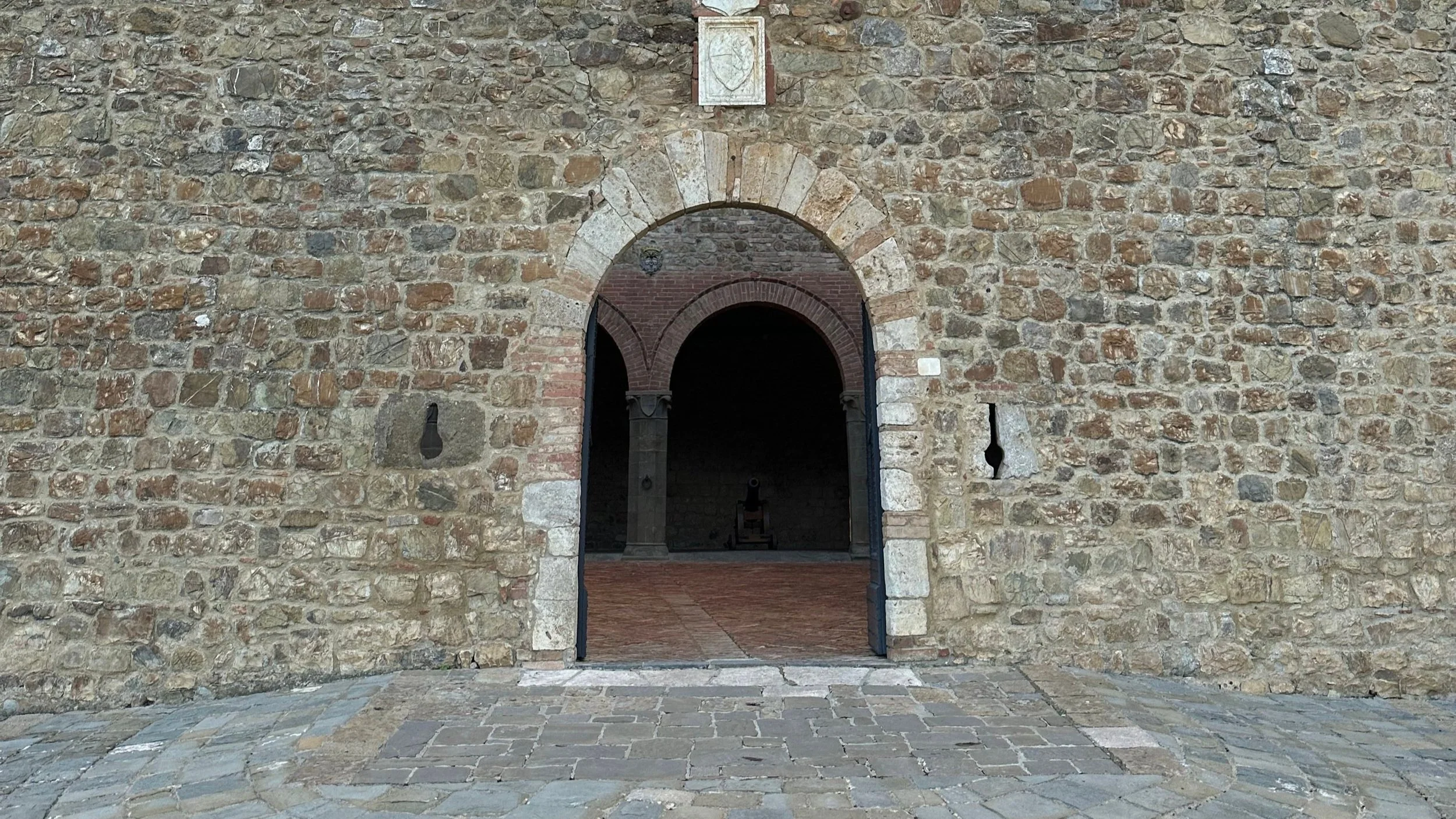
Enter through the narrow gate.
Matthew 8:13-14 has Jesus teaching “Enter through the narrow gate. For wide is the gate and broad is the road that leads to destruction, and many enter through it. But small is the gate and narrow the road that leads to life, and only a few find it.”
Preaching Christ crucified isn’t popular. What it really means is a faith greater than the rich young ruler with the inhibition of a child. We don’t want to give up what we have, and we like to think of ourselves as wise in our own eyes. The call to Christ involves the denial of self, identity outside of you, and transformation through new birth in Him.
If the narrow gate was as simple to enter through by mastery of abiding by the law in our own strength, surely more than a few of the billions of souls who’ve walked the earth would have found it. Of course Jesus is talking about himself as the narrow gate, and following him is the narrow road. John 14:6 tells us Jesus’ clarity, “I am the way and the truth and the life. No one comes to the Father except through me.”
This followship is discipleship. Discipleship will put you at odds with all around you, even in the midst of a place where you assume there ought to be the greatest consensus — be it family, friendships, or church. Do not compromise in following Christ, which is to endorse the thought — do not abandon the truth of the Word. Every believer in Christ as sanctified through knowing and sharing his Word (all of it) at some point becomes some measure of a theologian. Don’t be afraid, don’t be shy, but most importantly don’t put yourself in front of the Word. Let it, let him, lead. Even when it leads you into contradiction. Count it a blessing if as a consolation prize you receive clarity over agreement.
In 1884, C. F. W. Walther wrote in Law & Gospel, “If a theologian is asked to yield and make concessions so that peace may at last be established in the Church, yet if he refuses to budge on even a single point of doctrine — to human reason this looks like excessive stubbornness, even like downright evil intent. This is why such theologians are rarely loved or praised during their lifetime. On the contrary, they are scolded as disturbers of the peace or even as destroyers of the kingdom of God. They are regarded as men worthy of contempt. But at the end of the day it becomes clear that the very determined, unfailing tenacity of these theologians as they cling to the pure teaching of the divine Word by no means tears down the Church. On the contrary, it is this very attitude that — even amid the greatest dissension — builds up the Church and ultimately brings about genuine peace. Therefore, woe to the Church if it has no men of this stripe — men would who would stand watch on the ramparts of Zion, the alarm whenever a foe threatens to rush the walls, men who would rally to the banner of Jesus Christ, ready for a holy war!”
Wide is the road that leads to “peace in our time.” History shows us how terribly destructive it is. It accommodates the wants of many to ordain their fleeting truths for the sake of preferences and/or dictates in a temporal illusion.
But we have one peace to pursue, that is in Christ. He said as much to the churches in Revelation, he says as much in the message of the Gospel, He demonstrated as much in the work on the cross… as He is the way, the truth, and the life, so too is He the small gate along the narrow road that leads to life.

Who rules over you?
Another takeaway from men’s Bible Study this week was the concept of carnal Christianity… where we live wantonly in the gray area of faith and failure, when we profess Christ while tethered to hypocrisy of the flesh.
In the sermon on the mount, Jesus states in Matthew 6:24, “No one can serve two masters. Either you will hate the one and love the other, or you will be devoted to the one and despise the other. You cannot serve both God and money.”
And in 1 Timothy 6:10, the apostle Paul writes, “For the love of money is the root of all evil.”
So is money, and our love for it, what we are to avoid making an idol of and we’re all good? No, it’s representative of independence, and a currency toward control. And if we develop a love for that, for money, suddenly you’ve got freedom from Christ, even if you already thought you had freedom in Christ. Money, as a currency, is just a means toward or substitute for power, influence, control, our effect, our desired outcome, our satisfaction. This freedom from Christ is fleeting, and we know it, otherwise why repent?
In Pslam 39, David gets it. In verse 4 he writes, “Show me, Lord, my life’s end and the number of my days; let me know how fleeting my life is. You had made my days a mere handbreath; the span of my years is as nothing before you. Everyone is but a breath, even those who seem secure.”
For those who know Christ and consider the Bible inerrant and true, all the above begets a binary existence. 1 or 0, all or nothing, in or out. His way or your way.
Well be encouraged, Jesus showed us all in. He defeated temptation by the devil, devoted himself to God the father, and accepted the fate that exchanged our sin with his righteousness, accomplishing for us what we could never do on our own.
As Job learned, you can’t argue yourself to God, because you weren’t there when He put word to creation to wisdom. You can’t argue your case to God, no critique against the Father holds water, no appeal outside of repentance preserves our fleeting flesh.
You can however criticize your idols and they retreat in defeat!

Don’t take the bait!
Well, if you clicked through to the post, it wouldn’t be fair to say you took the bait. This isn’t click bait; there’s a purpose in this post and that’s to share some hope in Christ.
All credit to Pastor Rob from last night’s mens’ Bible study who offered up a better version of the following personal analogy of understanding where and how the enemy wants to tempt us: mountain lake fishing in the High Sierras.
First, let’s establish that lake and river fishing has some constants and some variables. The constants are the venues: rivers, lakes, or other sorts of fishing holes. Another constant is the target: fish. Setting aside variables we can do nothing about, like weather, a variable we tend to grapple with is “what are they biting on?”
In areas of plentiful fish and venues, but few outfitters to arm the fishermen, the intelligence of what the fish are biting on falls to the proprietors of the local sporting goods store. Or bait and tackle shop. Or maybe even Bass Pro Shop… after all, in certain cases, what are they going to bite on if you haven’t purchased the boat, right?
Well imagine the enemy is the owner of the shop. He sells all manner of bait, lure, and tackle for any variable of condition on what the fish are biting on. Presumably in any season, he knows whether a worm or egg or fly or lure will work on this lake or that stream or this spot. This is how the enemy is crafty with temptation. Different fish go for different bait in different places at different times, but with certainty hungry fish take the bait if you know what to tempt them with. That is how profits are made in spiritual warfare as we all are apt to be a hungry fish in our respective fishing hole.
(How wonderful too that Jesus called fishermen to follow Him and be fishers of men!)
Here’s the rub, again credit to Pastor Rob… these lakes and fishing holes in question, they’re stocked with fish. Fish don’t leave the breeding farm desperate for food, they’re delivered with full bellies. So when the enemy knows a particular lake has been stocked, it doesn’t matter what bait he’s selling, it doesn’t make a difference what temptation he’s wielding, “full fish don’t take the bait.” That’s because Christ Was Here. Taking thoughts captive to Christ means he remains.
In Luke 11:25, Jesus tells the parable of the clean house. Once our house is cleaned out, if we don’t replace the void with Christ, we are liable for further torment by what takes the place of the old mess. The full bellies of stocked fish are full of Christ, whether by His word, the Holy Spirit, or fellowship — or a godly combination of those in Christ. They are not hungry for what the enemy might arm the world with to tempt the fish via hook and lure!

New Mercies Every Morning
This is not the best photo I’ve captured of a rainbow, but it is the most recent. And like a typical rainbow encounter, you don’t embark on a task and put a rainbow sighting in the plan, they just happen, and if you’re so equipped and inclined like me, you take a picture of it.
The rain just passed through in LA over night, again. For So Cal it’s the kind of storm that reminds you there is such a thing as a hard rain, and that there should be such things as more reservoirs so that all these pineapple expresses (when they occur) don’t go to waste. In a place like LA, a rain scrubs the whole area with a fresh new shine for the day or two following, and there are always rainbows.
In the midst of the agony of Lamentations we get chapter 3, verses 22-23: “The steadfast love of the Lord never ceases; his mercies never come to an end; they are new every morning, great is your faithfulness.” For all the storms that blow and drench and pummel and torment, look for the rainbow that follows. The rainbow doesn’t emerge because we design or compel it. It doesn’t appear in a predictable spot where we could otherwise entrap it. It’s a gift and a glimpse.
And no, rainbows don’t point to a pot of gold at their mysterious end. They do point to Christ to say, Christ Was Here. Ever since the flood in Genesis and the covenant God made to never again utilize such a total reboot, we have these signs that reflect the promise of the plan the Father had for Christ to redeem us. As they are the sign of the covenant between God and the earth, let the awe of a rainbow that He puts on display be a reminder that grace comes from the Lord, evidenced amongst other things by a rainbow, and accomplished by his Son.

The Start of Something Renewed
Remember The Love You Had at First
I read the Bible each year. Correction, I complete a successive lap in the Holy Bible each year. I listen to the whole Bible, and then read it in more specific instances. At the end of 2023, in the chronological plan my wife and I were doing together, invariably I encountered Revelation 2 along the way.
Verses 1-7, which comprise the letter from Jesus to the angel of the church in Ephesus struck home… hard. The commendation Jesus gave that church resonated with affirmations that I proudly sought. I wanted to hear those in my life in that moment, and I wanted the church I was a part of to give praise for its part in various forms of steadfastness and faith. I wanted to see His order reflect my expectation of order, but alas that was a bridge too far.
In a season where I individually was digging in my heels to promote discipline in a church context, I became inclined to think that an earnest witness and pursuing a high moral standard would win the day in a season of strife. I became just another believer guilty of forsaking the love I had at first.
Think about that verse, verse 4. “Yet I hold this against you: You have forsaken the love you had at first.” What love did I have at first?
Was it the bond with Jesus I wanted to credit myself with developing over my decades as a follower? No, that would become a work or badge of honor. And thus we are saved by faith through grace so that no one can boast (Ephesians 2:9).
No, I realized that the love I had forsaken was the love that I had in my corner all along. Not a love I had for Christ, but the love Christ had for me. My expectations of an outcome among brothers and sisters can’t substitute for whatever the Lord will do with His church in His will for His Kingdom.
Verse 5 continues, “Consider how far you have fallen!” Was I at rock bottom from a personal crisis borne of sin pattern? With gratitude, no! But I was endeavoring to wrestle with God over whose vision for His church (locally) ought to bear out. I had fallen from standing with Christ. I had dared for a time to argue my case like Job, to no avail. What He wanted was followship from me not conformity from others to a goal I promoted. He deals with each of us individually, and He wanted renewal. To get there I had to repent and do the things you did at first (verse 5).
Around this time I started reading Dietrich Bonhoeffer’s Cost of Discipleship. One key point he makes is the call to follow Christ means we solve for the equation of “only believers obey and only the obedient believe.” Obeying Christ didn’t mean stubborn advocacy so that I may be justified as being correct. Obeying Christ meant a willingess to follow him, even if it were somehwere new in fellowship, so that his justification of me might be seen as a fruit of believing in Him through obedience.
Clearly there’s a biographical sketch that is obscured on purpose in this post, but that’s the point isn’t it. Trials we go through that become those “we count as joy” (James 1:2-4) aren’t about how we reconcile with others (though praiseworthy as that happens) they are how we reconcile with the Father. He foreknew us to place that love of grace personified in Christ in our corner.
This site is a now a place where that love I had at first, in fact where we all had at first, is a testimony for the sake that Christ had known and loved us all along the way. Don’t you forget it! -Mike